
Common Myths About British Seagulls Debunked
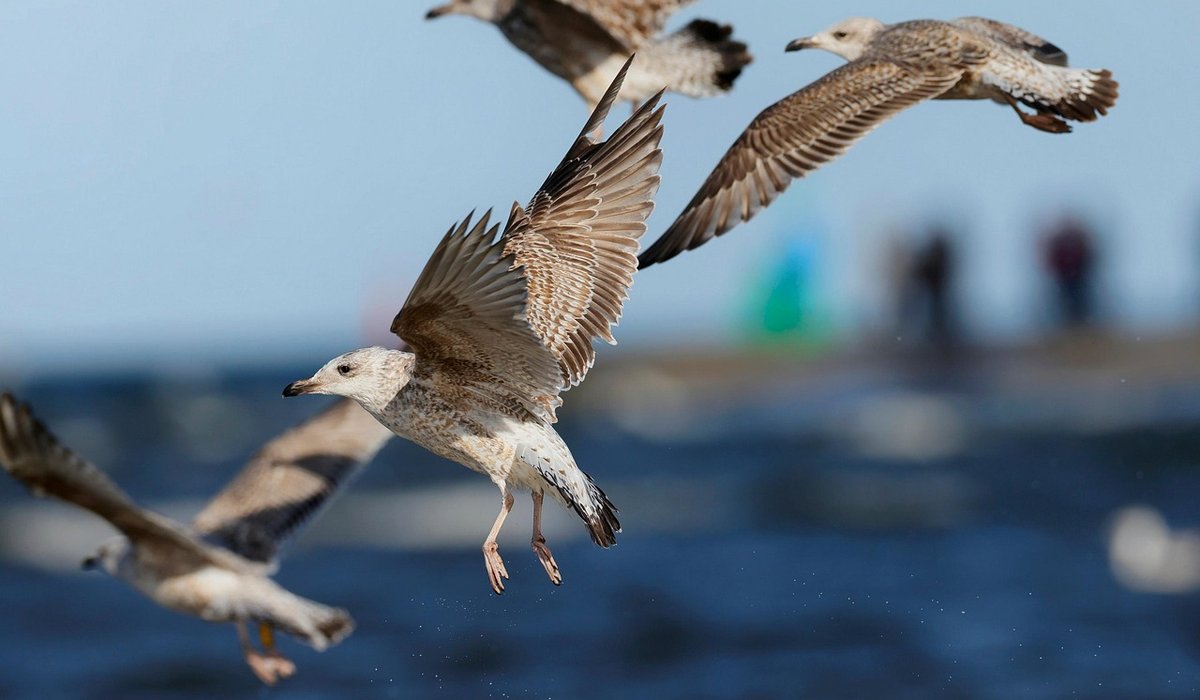
Few birds in Britain provoke such strong feelings as gulls. Love them or loathe them, most of what we think we know is a mixture of folklore, misremembered headlines and municipal frustration. Here is what the evidence actually says.
Not Every Gull Is a "Seagull"
There is no such species as a seagull. The word is a catch-all for the gull family, and around twenty species turn up in Britain regularly or occasionally, from the petite little gull to the hefty great black-backed gull. The ones you are most likely to meet are the herring gull — grey wings with black tips, pink legs, yellow bill with a red spot — and its slimmer cousin the lesser black-backed gull, which has yellow legs and darker grey wings.
There is also the black-headed gull, which is small, noisy and not actually black-headed: its chocolate-brown hood is moulted in late summer, leaving a white head with a dark spot behind the eye through the winter. The common gull, despite the name, is far less numerous in most of Britain than the black-headed gull. The genuinely oceanic one is the kittiwake, which spends most of its life at sea and returns to cliffs only to breed — its name imitates its call.
Myth: Gulls Belong at the Seaside
Plenty of gulls have never seen a beach in their lives. Herring and lesser black-backed gulls now nest on rooftops, chimneys and industrial estates well inland, and large numbers winter on reservoirs, playing fields, farmland and landfill sites. You can find flocks of several hundred black-headed gulls on a suburban football pitch in January.
Gulls are remarkably adaptable. They drink fresh water and have salt glands above the eyes that let them excrete excess salt, so a bird can commute between a rubbish tip and a rooftop without trouble. Urban gulls often stay put all year rather than migrating, because the food supply never stops.
Myth: They Are Just Chip Thieves
Gulls are opportunistic omnivores, and chips are a symptom rather than a cause. Their natural diet is varied: marine worms, mussels, crabs, small fish, insects, earthworms on ploughed fields, berries, and scavenged carrion. In the intertidal zone, herring gulls drop shellfish onto hard surfaces to break them open — a behaviour that is learned and passed on, not pure instinct.
What draws them to people is predictability. A picnic bench or a harbour food stall is a reliable, energy-dense source, and gulls are quick learners. Once a bird gets a reward, it repeats the behaviour, and a crowd builds on the same spot.
- Poor nutrition: bread and chips lack the protein and calcium growing chicks need.
- Knock-on problems: food left on the ground attracts rats and increases fouling.
- Bolder birds: regularly fed gulls lose their wariness, which is what makes them snatch food from hands.
Myth: They Attack People for No Reason
Gulls dive-bomb for one main reason: chicks. Nesting season runs roughly from March to August, and a bird defending a nest or a wandering chick will swoop at anything it sees as a threat, including people, dogs and cats. The classic strike comes from behind and above, sometimes a knock with the feet. Most swoops are warnings, and the birds usually pull away.
It helps to understand the chicks, too. Gull chicks leave the nest within days and wander across rooftops and pavements before they can fly. A grey-brown chick on a pavement is not necessarily abandoned, and moving or handling it usually does more harm than good. All wild birds, their nests and their eggs are protected by law, so removing a nest without a licence is an offence.
Myth: There Are More Gulls Than Ever
For several species, the reverse is true. Herring gulls and kittiwakes have declined substantially since the 1970s, and the herring gull is now on the red list of birds of conservation concern in the UK, meaning it is of the highest conservation priority. Kittiwake numbers have fallen sharply at many colonies, linked to changes in food availability at sea, predation and severe weather.
What has risen is the number of gulls nesting in towns. Birds that once bred on cliffs and islands have shifted onto flat roofs and chimney stacks, where there are fewer predators. So the bird shouting at you over a bin may belong to a species that is genuinely struggling overall. The numbers are not up everywhere; they have moved.
Living Alongside Them
A few practical habits make a real difference during nesting season:
- Put food waste out on the morning of collection, not the night before, and use a bin with a closing lid.
- Do not feed gulls, deliberately or by leaving food around. Take leftovers home.
- Give nesting rooftops a wide berth between April and August, and never walk directly under a nest.
- If you must pass a nest, hold an umbrella or wear a hat and keep moving; do not run or wave.
- Check roofs and chimneys outside the nesting season if you want to fit deterrents, and ask your council about licences and local advice before taking any action.
Gulls are intelligent, long-lived birds — many reach twenty years or more — with complex social lives and a remarkable tolerance for us. A little understanding, and a firmly closed bin, gets you a long way.


Explore the shoreline without disturbing nesting birds. Keep a respectful distance and follow local wildlife guidance at all times.
Trawlers bring easy meals to the surface. Learn how this behaviour shapes gull feeding habits around harbours and coastal towns.
Young gulls look surprisingly different from adults. Use this seasonal guide to separate common species with confidence on the shore.
From nest protection to litter clean-ups, community efforts make a real difference to vulnerable seabird populations around the UK.