
How to Go Rockpooling Near Seabird Colonies
Why rockpools and seabird cliffs belong together
The best rockpooling in Britain tends to happen in the very places seabirds love. Where cold, clean water meets hard rock, you get gullies, boulders and ledges draped in weed, and above them cliffs and headlands where guillemots, razorbills, fulmars, cormorants, shags and kittiwakes gather each spring to raise their young. That overlap is a gift for the curious shore explorer, but it also means you are wandering through a nursery. The crab under the stone is your quarry; the birds on the cliff above are trying to raise chicks without spending energy on you.
Rockpooling and birdwatching sit together beautifully, as long as you remember which one is the visitor and which one lives there.
Plan your visit around the tide
Rockpooling is a low-water activity, and the best pools are only exposed for a couple of hours either side of low tide. Spring tides, when the moon is new or full, pull the water back furthest and reveal the richest ground.
- Check a local tide table the day before and note both the time and the height.
- Aim to arrive as the water is still retreating, and start heading back well before it turns.
- Avoid big swells and onshore winds — waves make wet rock genuinely dangerous, and they stir up the pools.
- Tell someone where you are going and when you expect to be back. Mobile signal at the base of a cliff is often patchy.
Wear wellingtons or shoes with real grip. Weed-covered rock is slippery even in calm conditions, and a twisted ankle at the foot of a cliff is a miserable way to end the day.
Give nesting birds the space they need
Disturbance is cumulative. One person flushing a gull is a minor annoyance; a steady stream of people doing it all day means adults off the nest, eggs chilled and chicks exposed to predators. Many seabirds are long-lived and raise only one chick a year, so a bad season takes years to recover from.
As a rule of thumb, stay well back from cliff faces and never walk along the base of a nesting colony, even at low tide. Where birds are clearly agitated, calling or lifting off, you are already too close — back away quietly and take a different route. Keep dogs on a short lead near colonies, keep to marked paths, and leave drones at home. All wild birds are protected while nesting, and the most sensitive species have extra legal protection against disturbance. In practice, though, the simplest rule is the right one: if the birds react, you have crossed a line.
Seagulls: a name that covers several birds
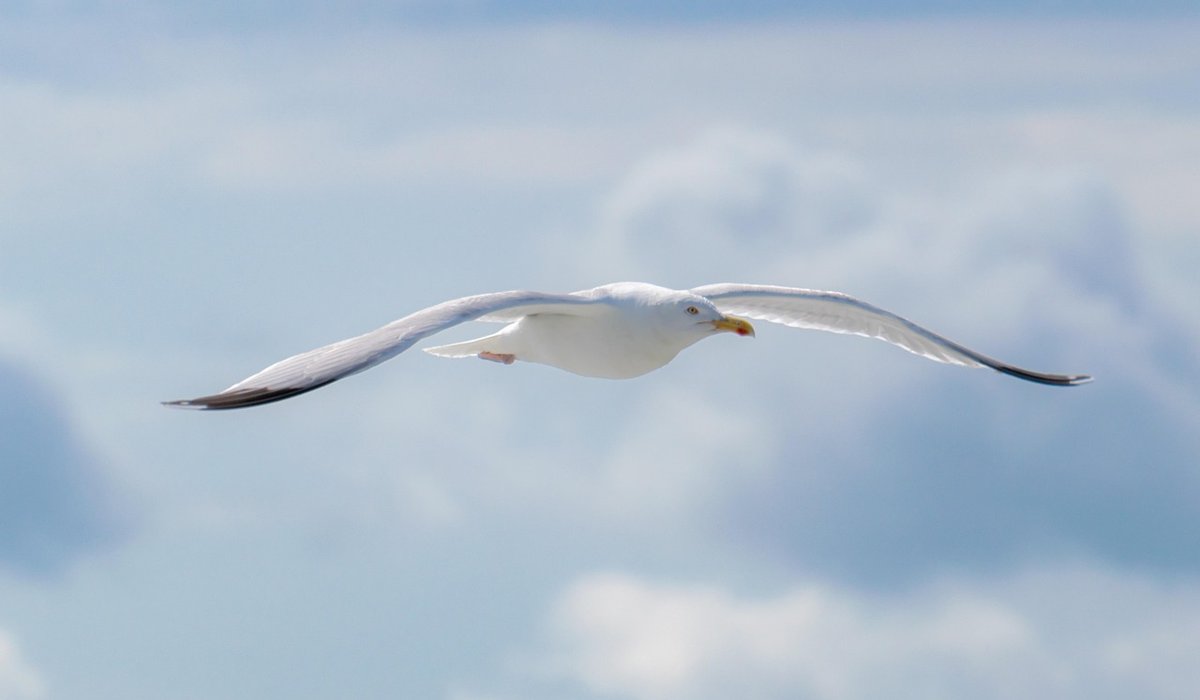
There is no such species as a seagull. What most of us mean is a herring gull, a lesser black-backed gull, a great black-backed gull or a common gull — plus the kittiwake, the only one of the group that is truly a bird of the open sea for most of the year. Kittiwakes nest on the narrowest ledges they can find, often on cliffs so sheer you wonder how anything stays attached. They are easily flushed and their numbers have fallen sharply, so they deserve particular care.
Gulls get a bad press, largely because of chips and bin bags, but they are magnificent birds: long-distance travellers, clever problem-solvers, and devoted parents. Please never feed them. Handouts condition birds to crowd people, draw them into roads and car parks, and make them bolder around nests and chicks. Watch them soaring on the updraught instead; it is a far better show.
Kit and technique for gentle rockpooling
You need very little, and most of it is about comfort rather than catching things.
- A white-bottomed tray or shallow bucket filled with seawater.
- A small net used to guide, not to scoop — never chase fish around a pool.
- A hand lens or magnifying glass, which turns a limpet into a landscape.
- Sun cream, a hat, drinking water and a warm layer. The coast is colder than the car park.
- A basic first-aid kit and a charged phone.
Wet your hands before touching anything, and return every creature within a few minutes to the exact pool and the exact spot you took it from. Turn stones over gently and put them back the way you found them — the underside is somebody's ceiling. Watch for beadlet anemones, periwinkles, dog whelks, shore crabs, blennies, prawns and barnacles, and enjoy the sheer oddity of them without needing to own any of it.
Leave it as you found it
Take everything home with you, including the litter that was not yours. Leave shells, seaweed and empty crab cases where they lie, keep out of fenced areas, close any gates you open, and follow whatever signage or local guidance the site provides — wardens and rangers know their patch better than any guidebook.
If you find an injured bird, do not attempt to handle it yourself; note the location and pass the details to the coastguard or a local wildlife rescue. And if you are unsure whether a path is safe or a colony is active, ask. A short conversation at the visitor hut protects both you and the birds. Then go quietly, look closely, and let the cliffs get on with the business of spring.


Young gulls look surprisingly different from adults. Use this seasonal guide to separate common species with confidence on the shore.
From nest protection to litter clean-ups, community efforts make a real difference to vulnerable seabird populations around the UK.
Learn how to approach gulls respectfully and use natural light to capture characterful portraits without disturbing them in their habitat.
Harbour gulls defend nesting ledges and feeding spots. Read the signs to avoid conflict and watch safely from a distance.