
Why Gulls Often Follow Fishing Boats
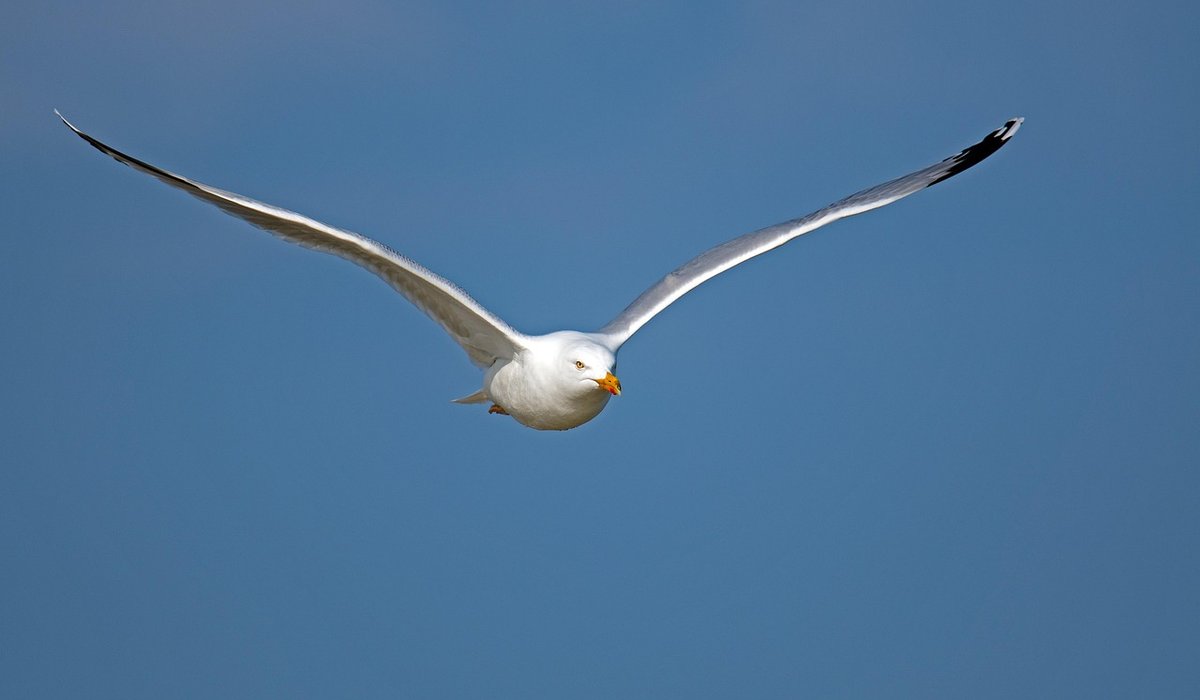
The moving larder at the stern
A working fishing boat does something no cliff ledge or mudflat can manage: it lifts food to the surface. When a trawl net breaks the surface, it brings up a cross-section of everything living near the seabed, along with whatever the crew cannot use. Gulls following in the wake read that moment instantly. They are not simply being curious. They are working a food source that appears, more or less reliably, several times a day.
Herring gulls, lesser black-backed gulls and great black-backed gulls are the usual suspects around English, Welsh and Scottish harbours. In winter you may also pick out a glaucous or Iceland gull in a northern fleet, while fulmars and gannets join the crowd off the west of Scotland. Smaller black-headed gulls tend to hang back, waiting for fragments rather than diving into the melee.
What actually comes up with the net
The old picture of gulls feeding on tonnes of discarded fish is now out of date. The landing obligation means most of what once went over the side is kept and brought ashore. Even so, a working deck is a messy place, and plenty still reaches the water:
- Small quantities of undersized or damaged fish that cannot be landed.
- Offal, heads and frames produced while gutting and sorting on longer trips.
- Bait, loose pellets and scraps from the galley.
- Sediment, shells and small invertebrates washed off the net and ground gear.
None of that is a banquet by itself. But combined with a boat constantly in motion and a net that keeps stirring the surface, it is enough to hold a flock for hours. Gulls are not fussy; they are simply very good at spotting calories and staying close to them.
How gulls learn the timetable
What surprises most people is how accurate the birds become. In a harbour town, gulls quickly learn which boats leave early, which return on the ebb, and which crews gut fish on the way in rather than at the quay. Watch a harbour wall for a week and you will see the same individuals turn up at the same hour, often perching on the same rail or bollard.
This is partly inherited and partly learned. Young gulls follow adults and imitate them, and over a few seasons a local population builds up a working knowledge of the fleet. Research on herring gulls has shown they respond to specific cues — engine note, hull shape, the direction a boat turns as it enters the harbour. To a gull, a familiar trawler is not a machine. It is a place where the food appears.
From boat to quay: how the habit spreads
Once a gull associates boats with food, it does not stop at the harbour mouth. The same birds follow the catch ashore. On landing days, quaysides, fish markets and ice stores become the focus, and the birds that work the fleet by day often roost on rooftops nearby by night.
Over time this shapes behaviour in coastal towns in three ways:
- Timing. Gulls become most active around tide changes and landing times, not simply at dawn.
- Boldness. Birds used to competing at the stern are far less wary of people than cliff-nesting birds.
- Diet. A mixed diet of fish, offal and town food produces a different condition and breeding pattern from a purely natural one.
The town birds you see snatching chips on a seafront may well be the same individuals that spent the morning working a trawler. The two habits are not separate lifestyles — they are one strategy, applied in different places.
Reading the behaviour
Next time you are on a quay, look at how the gulls behave before you decide what is going on.
- Birds rafting on the water behind a boat, facing the stern, are waiting for the next haul or wash-down.
- Birds flying tight circles over a returning vessel are tracking a known food source; they have seen that boat before.
- Birds dropping onto a quay the moment a lorry arrives are responding to a learned cue, not to the fish itself.
- A single gull following you along a promenade is after your pasty, not your company.
None of this makes gulls villains. Herring gulls are on the UK Red List, and their numbers have fallen sharply in recent decades. The birds that crowd our harbours are a fraction of what once bred on our cliffs. What looks like abundance in a town is often scarcity everywhere else.
Watching well and staying on the right side of the law
All wild birds in the UK, their nests and their eggs are protected. That means no touching, no nest disturbance and no handling of chicks, however stranded one looks. If you find a grounded gull, call a local wildlife rescue rather than taking it home.
Feeding is a greyer area. It is not illegal on most of the coast, but some councils have bye-laws covering seafronts and harbours, and a flock of gulls around a picnic is rarely a good outcome for anyone. If you want to watch the fishing-boat behaviour at its best, keep your hands empty. Stand back from the quay edge, pick a spot upwind of the gutting tables, and give the birds room to work. You will see far more of it — the posturing, the pirating of one bird by another, the sudden lift as a net is winched — than you ever will with a bag of chips in your hand.


From nest protection to litter clean-ups, community efforts make a real difference to vulnerable seabird populations around the UK.
Learn how to approach gulls respectfully and use natural light to capture characterful portraits without disturbing them in their habitat.
Harbour gulls defend nesting ledges and feeding spots. Read the signs to avoid conflict and watch safely from a distance.
Many coastal towns have memorable gull populations. Plan a gentle walk that respects wildlife and local residents alike.